Extension of a historic tenement house
Bytom, Polen
4Partners Sp. z o.o.,
Dąbrowa Górnicza,
Poland
MWArchitekci Sp. z o.o., Marlena Wolnik, Danuta Rokicka, Marcin Jojko
Katowice,
Poland
F.P.H.U. Piastek Tomasz Piestrzyński,
Rudniki,
Poland
Fassade: 200 m², 2 t, Sonderlösungen
RHEINZINK-CLASSIC walzblank
Dach: 300 m², 2 t, Sonderlösungen
RHEINZINK-CLASSIC walzblank
MWArchitekci
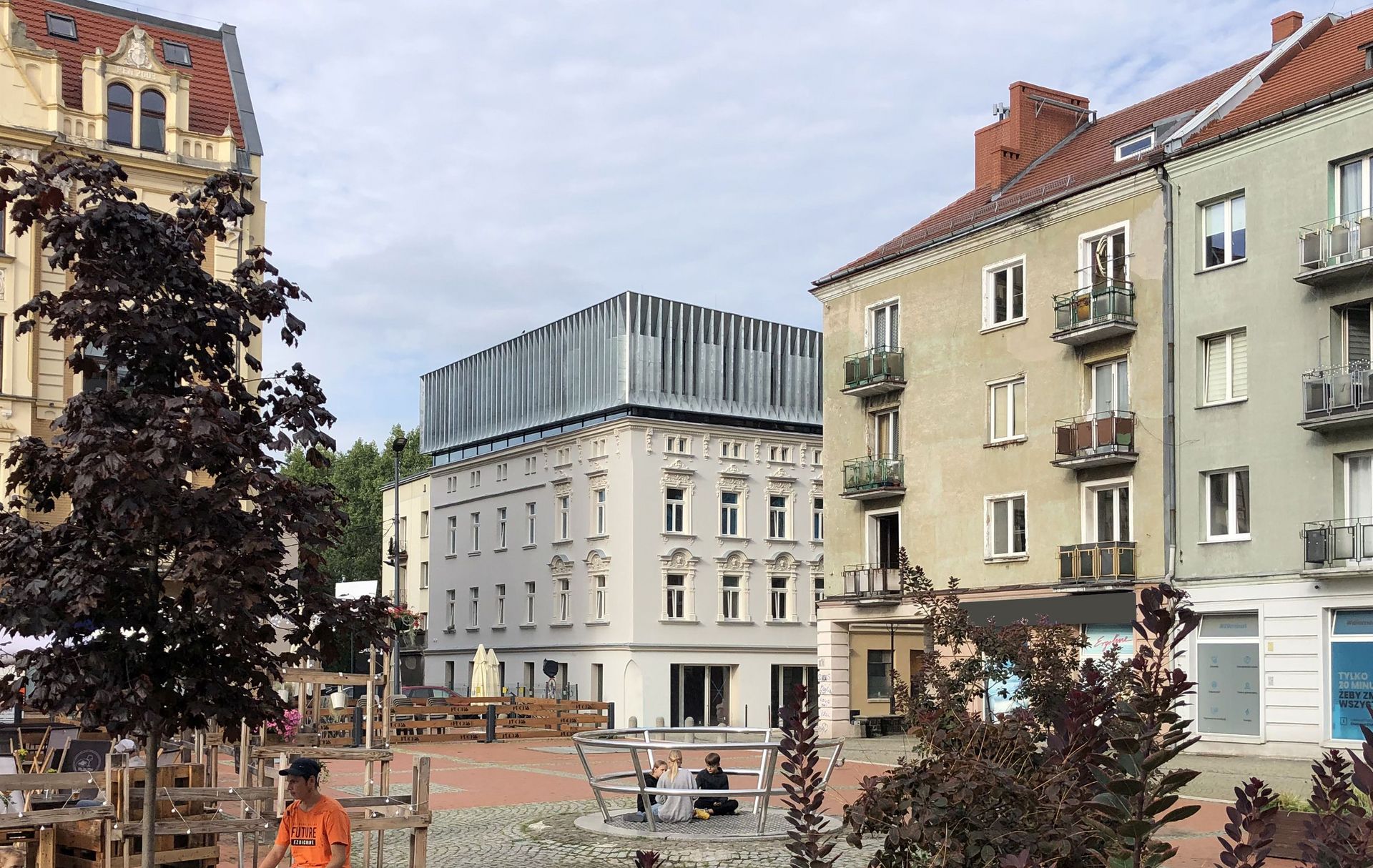
The history of this building dates back to the turn of the 15th and 16th centuries. The property, included in the Municipal Revitalization Program "Bytom 2020+", had for years been the weakest link in the downtown frontage: a corner building, the lowest in the block, with an exploited structure and degraded substance. The renovation encompassed a wide range of construction works, including the replacement of ceilings and parts of load-bearing walls, roof and facade repairs, as well as the installation of damp-proofing and new joinery. As a result, the tenement house has regained its representative character and once again serves as a hotel-type facility – this time as an aparthotel with 16 apartments and planned ground-floor gastronomy.
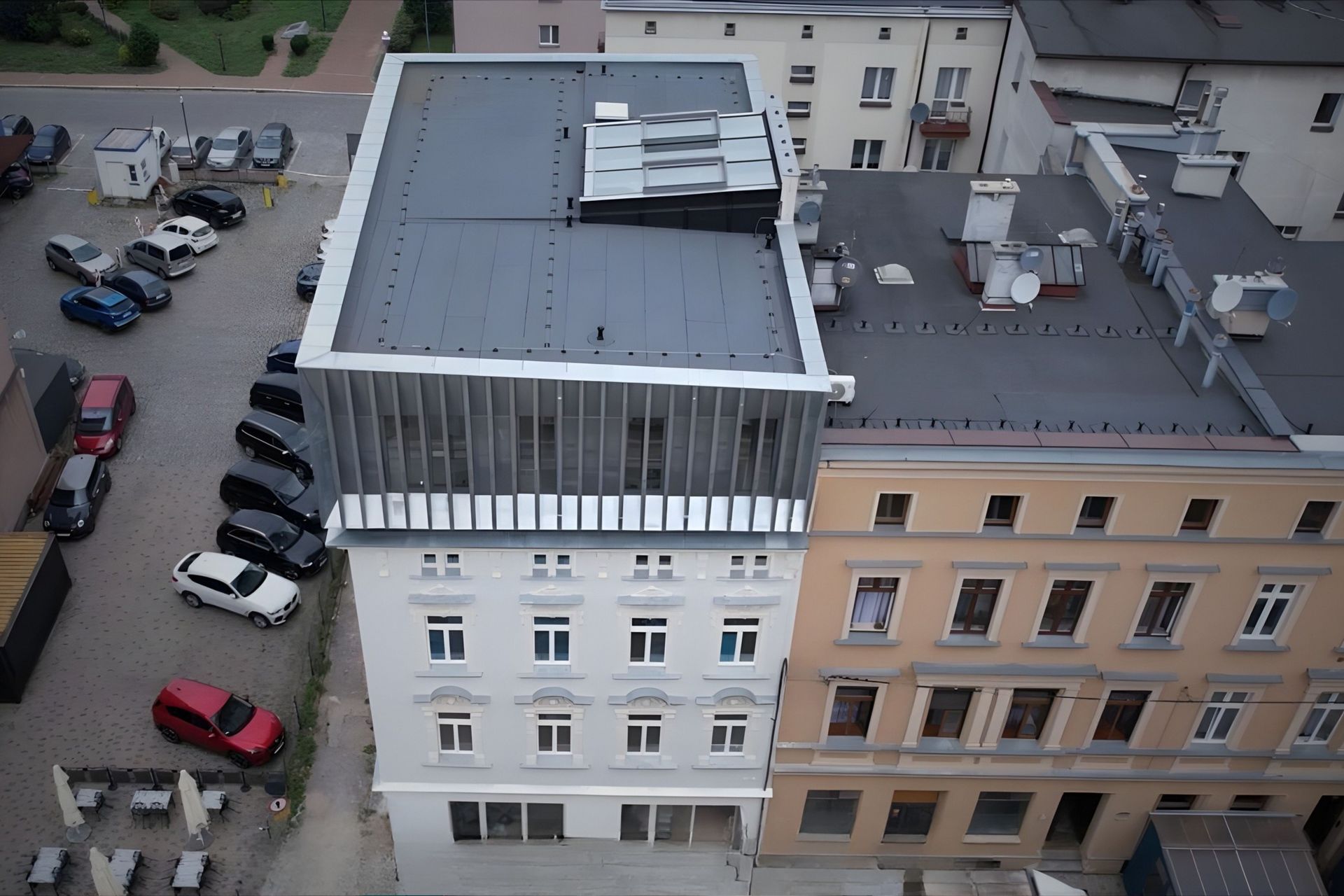
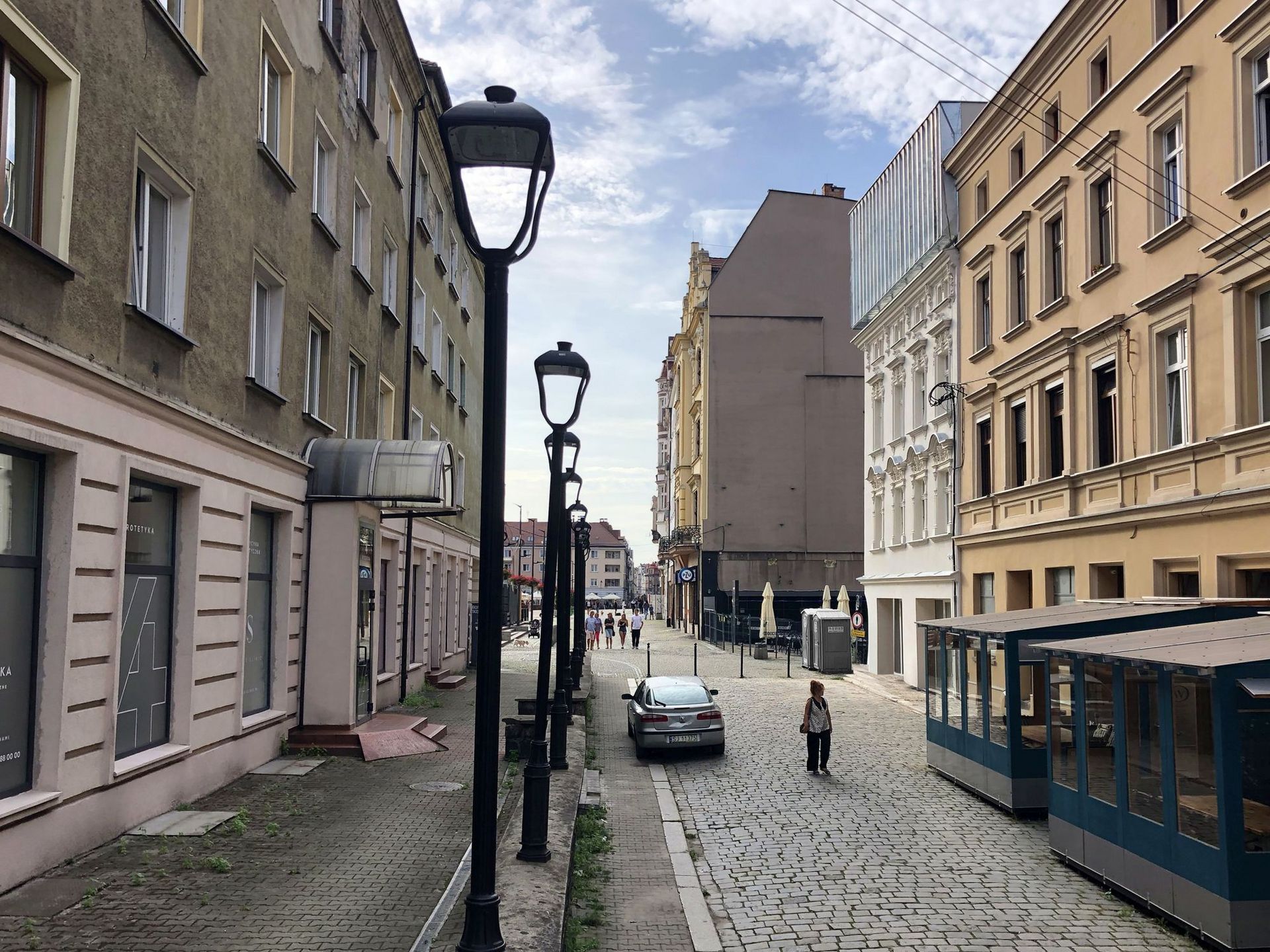
A key element of the contemporary intervention is the extension. The additional floor completes and organizes the street frontage, optically raising the building to the height of the adjacent development. The simple, clear form of the extension creates a distinct, contemporary accent that contrasts with the richly decorated, historicizing facade, yet without attempting to imitate it.
The use of RHEINZINK-CLASSIC titanium-zinc for the extension's finish is significant both compositionally and technically. The visually neutral material subtly reflects the light and colors of the sky, making the extension appear light despite its distinct contour, while simultaneously not competing with the historical facade details. This type of solution allows attention to be focused on the recreated cornices, window frames, and stucco work of the lower floors. The uniform material language of the details – from roof flashings to vertical and horizontal divisions – organizes the composition and ensures high durability and resistance to urban conditions, aligning the project with the standards of a sustainable approach to the revitalization of downtown buildings.